
What Ontario Professionals Need to Know Before Filing A bankruptcy or consumer proposal in Ontario…
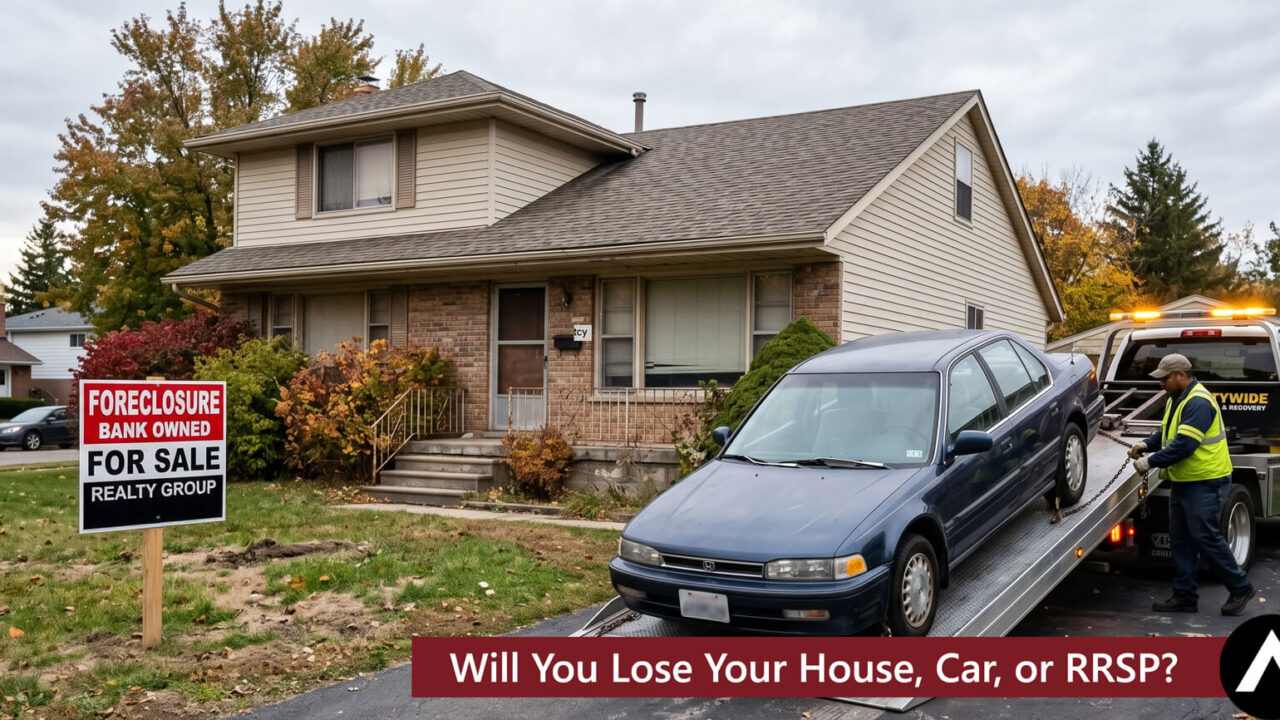
Will You Lose Your House, Car, or RRSP in a Consumer Proposal in Ontario?
Consumer Proposal in Ontario: Residents Should Understand What Happens to Your Vital Assets
If you are considering a consumer proposal in Ontario, your biggest concern is likely how to keep your assets safe. And we understand the worry. However, debt relief should provide a path forward, not a step backward.
A consumer proposal is a legal process administered under the federal Bankruptcy and Insolvency Act (BIA) that helps you manage debt while keeping your assets in your hands. As a formal alternative to bankruptcy, it focuses on repayment rather than the liquidation of your property.
Key Takeaways for Asset Protection in 2026
- You Keep Your Property: Unlike bankruptcy, a consumer proposal does not require you to surrender your assets to a Trustee.
- Home Equity: Most homeowners are able to retain their property when mortgage payments are current and home equity is accounted for in the proposal.
- Vehicle Security: Your vehicle is generally safe if you are current on financing payments, or if its value falls within the Ontario exemption limits.
- RRSP Protection: Your retirement savings are largely protected under federal law, though recent contributions can affect how your proposal offer is calculated.
What Is a Consumer Proposal in Ontario?
A consumer proposal is a legally binding agreement between you and your creditors, administered by a Licensed Insolvency Trustee (LIT). It allows you to:
- Reduce the total debt you owe.
- Stop interest from accruing on unsecured debt.
- Consolidate debt into one manageable monthly payment.
- Trigger an automatic stay of most creditor actions, including wage garnishments.
Who Can Legally File a Consumer Proposal?
You may see advertisements from “debt consultants” or “credit counsellors” offering to help with your debt. Both can provide general advice, and non-profit credit counsellors often offer useful budgeting guidance. However, under the Bankruptcy and Insolvency Act, only a Licensed Insolvency Trustee is authorized by the federal government to file a consumer proposal — the legal mechanism that stops interest from accruing, halts wage garnishments, and binds your creditors to a structured repayment plan.
If you are considering a formal insolvency option, working with an LIT ensures the process is administered under federal supervision through the Office of the Superintendent of Bankruptcy (OSB).
Will You Lose Your House, Car, or RRSP? The Reality of Consumer Proposals in Ontario.
If you are looking into a consumer proposal in Ontario, chances are you’re worried about losing the things you’ve spent years investing in. It is the number one concern we hear. You want debt relief, but you don’t want to see a moving truck in your driveway.
The good news is that a consumer proposal is structured around repayment rather than asset surrender, which means most filers are able to keep their key property. While bankruptcy can involve surrendering certain assets, a proposal is a deal you negotiate with creditors that allows you to keep your property while paying back what you can afford.
Protection in Today’s Economy
- Your Property: A consumer proposal does not require you to “hand over” your house or car keys to a Trustee.
- The Home Equity Factor: Most homeowners are able to keep their homes, subject to the equity calculation discussed below.
- Your Vehicle: If you can manage the payments on a financed vehicle, or your owned vehicle falls within the Ontario exemption limit, you generally keep your car.
- Retirement: Your RRSPs are largely protected from creditors under federal law, with one exception for very recent contributions.
Understanding the “Math” of Your Home
The fear of losing a home is understandable, especially given Ontario’s property values. However, a consumer proposal handles your unsecured debt (like credit cards) without directly affecting your mortgage.
Your bank generally cannot take your home or “call” your mortgage simply because you filed a proposal, provided your mortgage remains in good standing. As long as you keep your mortgage payments current, your home stays yours.
Your Licensed Insolvency Trustee (LIT) will look at your home equity to help determine what your creditors would expect to receive in a hypothetical bankruptcy. Generally, this means your proposal offer needs to provide creditors with at least as much as they would receive in a bankruptcy — but it doesn’t mean you have to sell the house to pay them.
Keeping Your Car
For many people, a vehicle isn’t a luxury — it’s a vital necessity for work and daily life. A consumer proposal typically allows you to keep your car.
If your car is financed, the rules are straightforward. Provided you continue making payments to the lender, you generally keep the vehicle. If you own the car outright, the Ontario Execution Act regulations provide an exemption for one motor vehicle. As of the most recent regulatory amendment (O. Reg. 393/25), that exemption is $8,578. If your car is worth more than that amount, the equity above the exemption is factored into your monthly proposal payment. You can typically keep the car; you just contribute a bit more into the proposal over time.
Why Your RRSP Is Safer Than You Think
This is one of the most significant advantages of a consumer proposal. Under federal law, your RRSPs are generally protected from your creditors.
There is, however, one wrinkle to be aware of. Under section 67(1)(b.3) of the Bankruptcy and Insolvency Act, RRSP contributions made in the 12 months before filing are not protected in a bankruptcy. Because a consumer proposal must generally offer creditors at least what they would receive in a bankruptcy, recent RRSP contributions can affect the calculation of your proposal offer. Your retirement savings stay in the account — but your monthly payment may be slightly higher to reflect those recent contributions.
Important Rules to Consider
To ensure you have the full picture of how a proposal works in Ontario, keep these key facts in mind:
- Debt Limits: Consumer proposals are currently available to individuals with total unsecured debts of $250,000 or less, excluding the mortgage on your principal residence. Joint proposals between spouses are capped at $500,000 combined. Note: A regulatory amendment proposed in Canada Gazette, Part I (November 29, 2025) would, if enacted, increase the individual threshold to $325,000 and index it to inflation. As of this writing, the amendment has not been brought into force, and the $250,000 limit continues to apply.
- Duration: A consumer proposal can run for a maximum of 5 years (60 months).
- Creditor Voting: Your creditors must accept the proposal. Acceptance requires a simple majority (50% plus one) of the dollar value of the creditors who choose to vote.
Why Professional Guidance Matters
Accuracy is vital when your financial future is at stake. A Licensed Insolvency Trustee will review your specific financial picture and ensure your proposal is fair, realistic, and compliant with the BIA and applicable provincial law.
We focus on clear, honest information so you can make informed decisions. Click here to learn more about our consumer proposal process.
Common Questions
- Will my bank cancel my mortgage? Provided your mortgage is in good standing, banks in Ontario do not typically trigger default clauses based on a consumer proposal. The terms of your mortgage agreement will govern.
- Can I keep my tax refunds? In a consumer proposal, you generally keep your future tax refunds. In a bankruptcy, refunds for the year of filing are typically directed to your creditors.
Is This the Right Option for You?
Every financial situation is different. A consumer proposal is one option among several available under the BIA, but it has eligibility requirements — currently, total unsecured debts of $250,000 or less, and creditor acceptance of the proposal terms.
We don’t believe in “one-size-fits-all” templates. We look at your family’s circumstances and your overall financial picture to discuss whether a consumer proposal, bankruptcy, or another option may be most appropriate.
Would you like to understand the math for your specific situation? Contact us today for a free consultation.

Related Posts