
Every quarter the federal Office of the Superintendent of Bankruptcy publishes the official count of…
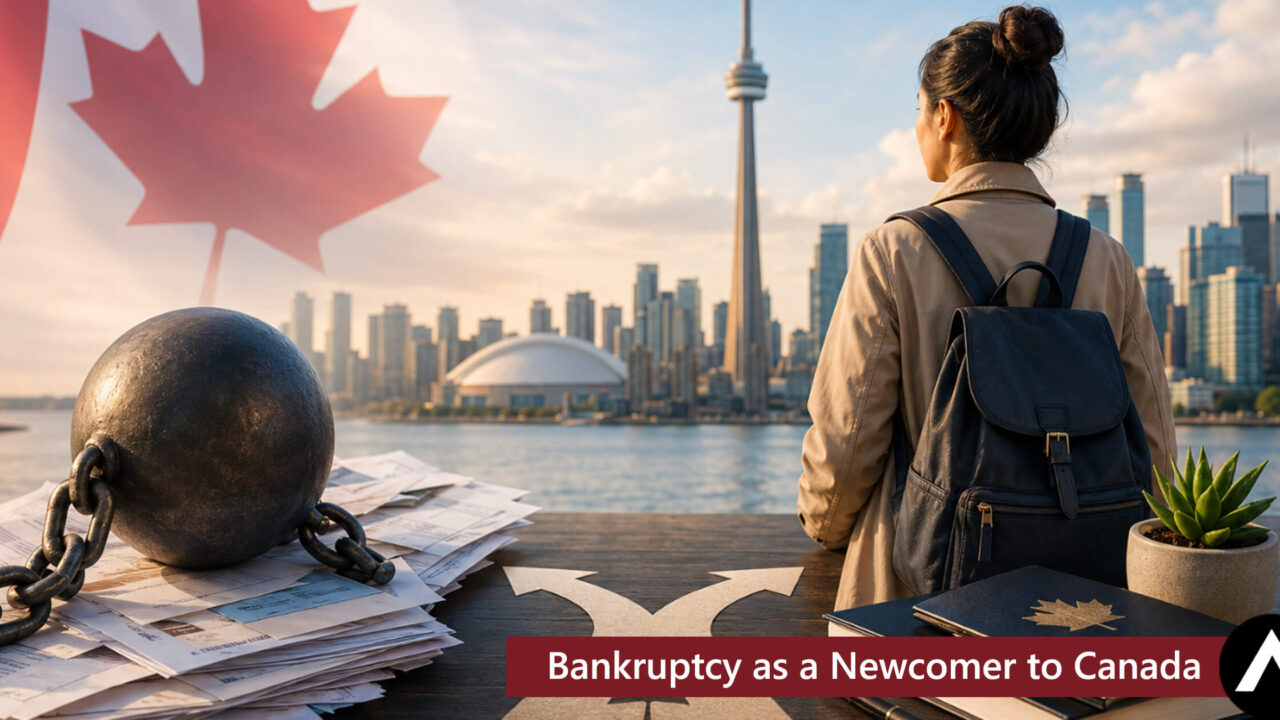
Bankruptcy as a Newcomer to Canada: Debt and Insolvency in Ontario
A Plain-Language Guide About Bankruptcy as a Newcomer to Canada
Permanent resident? Work permit holder? You can file for a consumer proposal or bankruptcy as a newcomer to Canada, provided you currently live here. Filing does not make you inadmissible (it does not bar you from entering or staying in Canada) and does not affect a PR or citizenship application under the Immigration and Refugee Protection Act.
One significant exception: an undischarged bankrupt (someone who has filed for bankruptcy but has not yet been legally released from it) cannot sponsor family members. For that reason, a consumer proposal often serves newcomers better. It resolves debt without triggering that restriction.
Best Laid Plans
Many immigrants and newcomers arrive in Ontario with a plan.
A job offer, a rented apartment, a credit card to start building a Canadian credit history. Then something shifts: an illness, a job loss, a family obligation back home, or simply the cost of settlement running higher than expected. Credit card balances grow. A car loan gets harder to manage. A tax debt from self-employment quietly compounds.
By the time someone calls us, they’ve often been carrying that stress for two or three years. They’re afraid to ask for help because they don’t know what filing for bankruptcy or a consumer proposal would mean for their visa, their PR card, or their chance of sponsoring a parent or sibling later.
The fear is understandable. The answers, fortunately, are clearer than most people expect.
What Is a Consumer Proposal or Bankruptcy?
These are the two main formal debt relief options in Canada for individuals who cannot pay what they owe.
Bankruptcy is a legal process under the federal Bankruptcy and Insolvency Act (BIA). Most non-exempt assets (anything beyond what provincial law lets you keep) are surrendered, debts are eliminated (with limited exceptions), and the person receives a discharge (the legal release from those debts), typically after nine months for a first-time bankruptcy with no surplus income.
A consumer proposal is also governed by the BIA. Instead of bankruptcy, the debtor proposes a repayment arrangement to creditors. It’s usually a reduced amount, paid monthly over up to five years. Assets are retained. There is no discharge from “bankruptcy” because bankruptcy never occurs. A consumer proposal is a separate process.
Both options stop collection calls, wage garnishments, and CRA enforcement the moment they are filed.
Can Someone With Only Permanent Resident Status File for Bankruptcy in Canada?
Yes. Citizenship is not a requirement under the BIA. What matters is that you are currently residing in Canada, carrying on business in Canada, or have property in Canada. There is no minimum number of years you must have lived here first.
Immigrants in many different situations qualify. Permanent residents, temporary foreign workers, international students, and refugee claimants can all file, provided they meet the insolvency threshold. Generally, the amount owed is at least $1,000 and they’re unable to pay debts as they come due.
Will IRCC Find Out About My Bankruptcy?
The Office of the Superintendent of Bankruptcy maintains a public database of insolvency filings, and it is searchable. That said, IRCC does not receive automatic notification of a bankruptcy or consumer proposal, and insolvency is not part of a standard criminal record check.
In our understanding, a filing is not automatically reported to IRCC and is not connected to your immigration file. But we are an insolvency firm, not an immigration firm. If you have specific concerns about how your particular application might be affected, please speak with a licensed immigration consultant or immigration lawyer. They are the right source for immigration-specific advice.
Does Filing for Bankruptcy Affect a Citizenship Application?
No. Bankruptcy is not a prohibition under the Citizenship Act. The situations that prevent someone from becoming a Canadian citizen are primarily related to criminal convictions and security matters. Not financial difficulty.
The main requirements for citizenship are physical presence, language ability, knowledge of Canada, and an intention to reside here. None of those are affected by a bankruptcy or consumer proposal filing.
Again: if you have a specific citizenship application in progress and want certainty about your situation, consult a licensed immigration professional. What we can confirm is that the legislation itself does not list insolvency as a bar.
Does Bankruptcy Affect Family Sponsorship?
This is the one area where the answer is more complicated. Where the choice between bankruptcy and a consumer proposal matters most.
Under section 133 of the Immigration and Refugee Protection Regulations (IRPR), a person who is an undischarged bankrupt is not eligible to sponsor a family member. This applies across family class and spousal sponsorship applications outside Quebec.
What this means practically:
- If you file for bankruptcy, you cannot sponsor a family member while you remain undischarged. A first-time bankruptcy with no surplus income typically results in discharge after nine months. Once you receive your discharge, the restriction lifts and you become eligible to sponsor.
- If you file a consumer proposal, you are never classified as an undischarged bankrupt. A consumer proposal does not appear in the IRPR definition of bankruptcy. Sponsorship eligibility is not affected by a consumer proposal filing.
For newcomers who plan to sponsor a spouse, parent, or dependent child in the future, this distinction is significant. It is one of the main reasons we explore consumer proposals before bankruptcy for clients in this situation.
What Happens to Debt I Brought from My Home Country?
A Canadian bankruptcy or consumer proposal covers all of your unsecured debts, including debts owed to creditors in other countries.
Foreign creditors are entitled to file a proof of claim (a formal request to be paid from your insolvency proceeding) in your Canadian insolvency proceeding. If they do so, the debt is included and addressed alongside your Canadian creditors.
There is an important limitation: your Canadian discharge or completed consumer proposal may not be enforceable in another country. A creditor located abroad could potentially continue to pursue the debt in their own jurisdiction, depending on local law and whether they have assets of yours to pursue there. If you have significant foreign debt and assets or connections in another country, this is worth discussing with us before filing.
For most newcomers we work with, the foreign debt is owed to a bank or lender in their home country with no practical ability to enforce against assets in Canada. In those situations, the Canadian filing provides the relief that’s needed.
Bankruptcy vs. Consumer Proposal: What Works Better for Newcomers?
For most newcomers we work with, a consumer proposal is worth exploring first.
Credit history matters more at this stage. A bankruptcy stays on your Canadian credit report for six years after your discharge date with Equifax, and up to seven years with TransUnion in Ontario. A completed consumer proposal comes off three years after your final payment, or six years from the date you filed, whichever comes first. When you’re in the early years of building credit in Canada, that difference is meaningful.
A consumer proposal doesn’t make you an undischarged bankrupt. As covered above, this matters for sponsorship.
Your assets are protected. A consumer proposal does not require surrendering assets, which is important if you’ve made purchases during settlement that you depend on.
Payments are structured and predictable. For newcomers with variable or commission-based income, knowing exactly what you owe each month, regardless of what you earn, provides real stability.
That said, bankruptcy may still be the right answer in some situations, particularly when total unsecured debt is very high, when there are no assets to protect, or when the priority is a fast resolution. Every situation is different. The right path depends on what you owe, what you earn, and what matters most to your future plans.
Sponsorship and Citizenship: Quick Reference
| Situation | Can You Sponsor a Family Member? | Citizenship Application Affected? |
|---|---|---|
| Filed consumer proposal (active) | Yes (proposal does not create bankrupt status) | No |
| Filed bankruptcy (undischarged) | No (ineligible while undischarged under IRPR s.133) | No |
| Filed bankruptcy (discharged) | Yes (restriction lifts at discharge) | No |
| Completed consumer proposal | Yes | No |
Immigration consequences are determined by IRCC, not by a Licensed Insolvency Trustee. For questions about a specific application, consult a licensed immigration consultant or immigration lawyer.
Questions Newcomers Often Ask Us
Do I need to be a citizen or PR to file in Ontario? No. Current residency in Canada is sufficient. You do not need to have lived here for any minimum period.
Will my employer find out? A consumer proposal and bankruptcy are public record, but employers do not receive notification. Wage garnishments, which can alert employers, stop immediately when a filing occurs.
Can I include my student loan debt? Government student loans can be discharged through a bankruptcy or consumer proposal only if at least seven years have passed since you stopped being a student. If it has been five to seven years, you can apply to the court to have them discharged on the grounds of financial hardship, though this is not automatic. If it has been less than five years, government student loans survive the filing and you will still owe them afterward. Private student loans (from a bank or lender, not a government program) are treated as regular unsecured debt and can be included regardless of when you borrowed.
What if I owe CRA? Tax debts owed to the Canada Revenue Agency are unsecured debts and are included in both bankruptcy and consumer proposals. CRA enforcement, including garnishments and frozen accounts, stops upon filing.
Where to Start
Debt does not resolve on its own. And in our experience, the longer a newcomer waits, hoping things will stabilize, the fewer options remain. Garnishments happen. Bank accounts get frozen. The stress bleeds into everything else.
A first conversation with a Licensed Insolvency Trustee is free and confidential. It carries no obligation. What it gives you is an honest assessment of your situation, the options available to you, and what each one means for your plans in Canada.
If you are an immigrant or newcomer to Ontario managing debt that has become unmanageable, reach out to Adamson & Associates and John Adamson, CPA, CMA, CIRP, LIT. We work with people in all circumstances, and we understand that your situation here is built on a lot of effort and hope. We take that seriously.
Call John at 519-310-JOHN (5646) for a free, confidential consultation. Day or evening, we are open late to help you.
This article is provided as general information only. It does not constitute legal, financial, or immigration advice. Immigration consequences are determined by IRCC under the Immigration and Refugee Protection Act and its Regulations, not by a Licensed Insolvency Trustee. For questions about how a filing may affect a specific immigration application, consult a licensed immigration consultant or immigration lawyer. Always verify current regulator rules before making any filing decision.

Related Posts